people’s accounts · uncertain causes
What people felt after trying the KLOW peptide mix
People joined the ingredients hoping to improve repair. Some later described easier joints or smoother skin. Others reported discomfort or little help. Their accounts don’t show that the mix caused those changes.
What the hope of repair hasn’t shown about feeling better
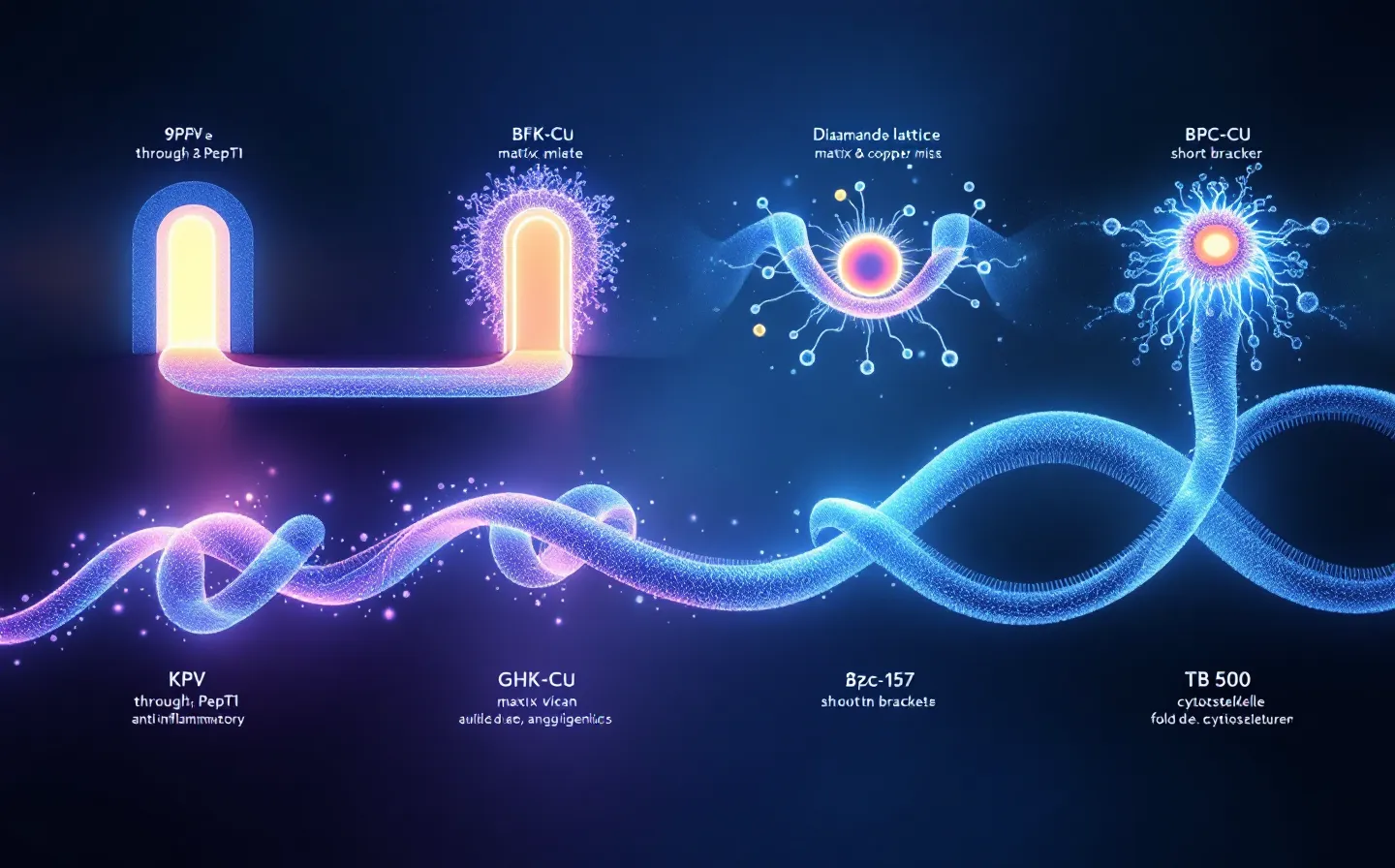
The earliest mixers hoped damaged tissue would repair better. They put KPV, GHK-Cu, BPC-157 and TB-500 together as KLOW peptide. Earlier ingredient studies gave them reasons to try. Those studies can't answer whether your aching shoulder or painful knee gets better, whether relief lasts, or whether the mixture causes you more trouble while you wait for healing.
People can describe how they felt after use. Their reports can't tell you why pain eased or discomfort began. Separate studies raise safety concerns without proving harm from KLOW. KLOW research explains the experiments behind those concerns.
What users noticed in their joints, skin and stomachs
Research users described the changes below; no trial has checked their accounts by comparing treatments, and the cause hasn't been established. Researchers would need to compare groups receiving different treatments. That hasn't happened for these accounts. You also don't know the amounts or actual bottle contents.
Easier movement and less joint pain came up most often
People described nagging joint injuries easing over several weeks. Many reports concerned sore shoulders, trouble with knees or Achilles tendon pain. Some described improvement roughly three to four weeks after starting. BPC-157 and thymosin beta-4, the body protein used to make another ingredient, were studied separately and don't prove the cause.
Pain sometimes eased before people noticed other signs of recovery. Accounts describe less shoulder pain or a knee feeling better. Feeling less pain doesn't measure repair inside a tendon. Your joint could hurt less while damaged tissue still needs care.
Some people felt fewer aches and less bowel discomfort. Users sometimes gave KPV credit for doing more than GLOW. GLOW is another mixture, made without KPV. Their impressions don't establish which mix would ease your symptoms.
Fewer accounts described changes in skin, digestion or sleep
Skin sometimes felt smoother and less dry over several weeks. Some people also thought their pores looked finer. They often credited GHK-Cu, the largest ingredient by bottle weight. Nobody checked that cause, so your skin benefit remains uncertain.
Some users were surprised that stomach trouble seemed easier. They described better digestion after trying the mixture. Separate bowel studies with KPV and BPC-157 explain some interest. Those studies didn't show better digestion in people receiving KLOW.
Other people mentioned sleeping better or having vivid dreams. Some welcomed sleeping better. Others simply noticed stronger dreams, without calling the dreams a problem. Your nights could be different from the sleep described in those accounts.
Some users felt unwell, and others noticed no help
The skin around a shot sometimes became itchy, red or swollen. This was the most mentioned complaint, usually mild and brief. Nobody checked the amount or ingredients in those bottles, so you don't know whether the skin reacted to the mixture itself or to how someone prepared the liquid for a shot.
Some users felt tired soon after they began. Accounts describe one to three days of low energy. Those users said the tiredness then passed. A study hasn't established why they felt tired or whether you'd respond similarly.
A few people reported a mild headache or dizziness. They generally described these problems as brief. The accounts don't show who was more likely to feel unwell. A trial hasn't traced those symptoms to the mixture.
A smaller share of accounts described warmth or flushing soon after use. Those users noticed warm skin or a flushed look. Nobody tested why the skin became warm or flushed. You can't identify the cause from the order of events alone.
Some stomachs felt queasy for a short time. Most users described mild, brief upset. You don't know why their stomachs felt queasy. Reports of queasy stomachs don't predict whether the mix would upset your stomach.
Others felt little improvement or none. Some wondered whether their bottles contained the expected ingredients. Suspecting a problem doesn't show that a bottle was wrong. Without testing the contents, you can't establish what those people received.
What may cause harm even when users report relief
Your safety hasn't been settled by these reports. Individual-ingredient experiments raise some of these concerns for you. Drug approval and sports rules raise separate limits. The concerns below aren't proven harms from KLOW in people.
Sports testing can make this mixture off-limits. TB-500 comes from thymosin beta-4, one of the proteins your body makes. WADA's sports drug rules ban that full protein all year. TB-500 is covered during contests and between contests [7][15].
New blood vessels could help a tumor as well as tissue. BPC-157, TB-500/thymosin beta-4 and GHK-Cu have links to vessel growth. BPC-157 affected vessel growth [2][10], while thymosin beta-4 increased a substance encouraging vessels [11]. Other copper-carrying protein pieces also encouraged vessels in experiments [9].
A growing tumor needs a supply of blood. With cancer, vessel effects linked to the body protein thymosin beta-4 could matter to your health. Researchers haven't shown that KLOW makes tumors grow in people. Your cancer risk can't be settled from these ingredient experiments.
Adding ingredients hasn't shown that you get more help. You lack tests of KPV, GHK-Cu, BPC-157 and TB-500 given together against fewer ingredients. You also lack a comparison using a placebo: treatment with no active ingredient. There's no such test establishing the mixture's benefit for you.
BPC-157 can fall to half its amount in under about 30 minutes [7]. KPV and GHK-Cu would probably leave your body even sooner. Your blood would then hold different ingredient shares from the bottle. The parts might therefore have little time to act together.
The copper could matter when copper is hard for your body to remove. GHK-Cu makes up about 50 mg of an 80 mg bottle. The ingredient carries copper, which might build up after repeated use. Wilson's disease causes copper buildup and makes this concern greater [4][5].
Researchers haven't measured copper buildup from this mixture in people. They haven't established repeated use as safe for you. You can't work out copper retained in your body from bottle weight, especially with an illness that makes removal harder. That possible harm still needs testing.
Reducing inflammation might affect your body's fight against germs. Inflammation is the response to damage or infection that often causes swelling. KPV reduced that response in bowel and immune-system cells [3]. Effects during infection or illness where immune defenses harm your own healthy tissue haven't been tested in people.
FDA hasn't approved these ingredients to treat people. The combined mixture lacks that approval too. FDA previously listed BPC-157 in category 2, its group for serious safety concerns [15]. Neither that history nor a research label proves safety for you.